


Switzerland is one of the friendliest places in the world to hold assets, and itsreputation matches reality. Private investors here sell BTC at a profit and, in most cases, keep their francs of the gain. It doesn’t mean cryptocurrency lives outside the tax system. Wealth tax, income tax and a set of cantonal rules all […]
31.10.2025


The crypto market is known for its high volatility. This is why conventional strategies such as holding stable stocks and bonds in traditional markets are ineffective here.
According to CoinMarketCap, the global crypto market capitalisation is currently around $3.61 trillion. However, economic and political factors can influence it significantly, so investing in crypto is not for the faint-hearted.
Moreover, there are many scam projects on the market. The Chainalysis Crypto Crime Report shows that criminal activities have already resulted in losses of over $502 million in early 2025, and this figure is constantly growing.
This makes it difficult to identify assets such as Bitcoin or Ethereum that could be worthwhile investments. Another challenge is diversifying your crypto portfolio to maximise profit and minimise risk.
What is a crypto portfolio?
It is a collection of cryptocurrency investments that you own. It may include coins, tokens or other blockchain-based assets. Each asset has its own purpose: some coins are intended for long-term investment, while others generate the most profit from short-term price fluctuations.
The main goal of any crypto portfolio is to minimise the risk of high crypto market volatility by managing risk through diversification. The composition of a portfolio may vary depending on your goals, risk appetite, and profile.
Finding new, promising coins can be challenging if you don’t know the main rules of the market, have no evaluation criteria and are faced with lots of scams that change the rules regularly.
Moreover, before you start investing, you must set clear investment goals. Do you plan to build long-term wealth or simply generate some passive income as a backup plan? Your financial goals should form the basis of your crypto portfolio.
However, crypto assets are very promising to investigate because, if you find a true gem, all the scams and previous failures would be offset. Remember that, in the right hands, price volatility can be profitable as well as risky.
To find the best gems, you must use a number of resources, including:
Exchanges
Crypto exchanges have always been one of the most reliable sources of gems. Leading crypto platforms like Coinbase or Binance showcase promising newcomers every day.
The good thing is that you can also check all the necessary market information here, including charts, market capitalisation and daily volume changes.
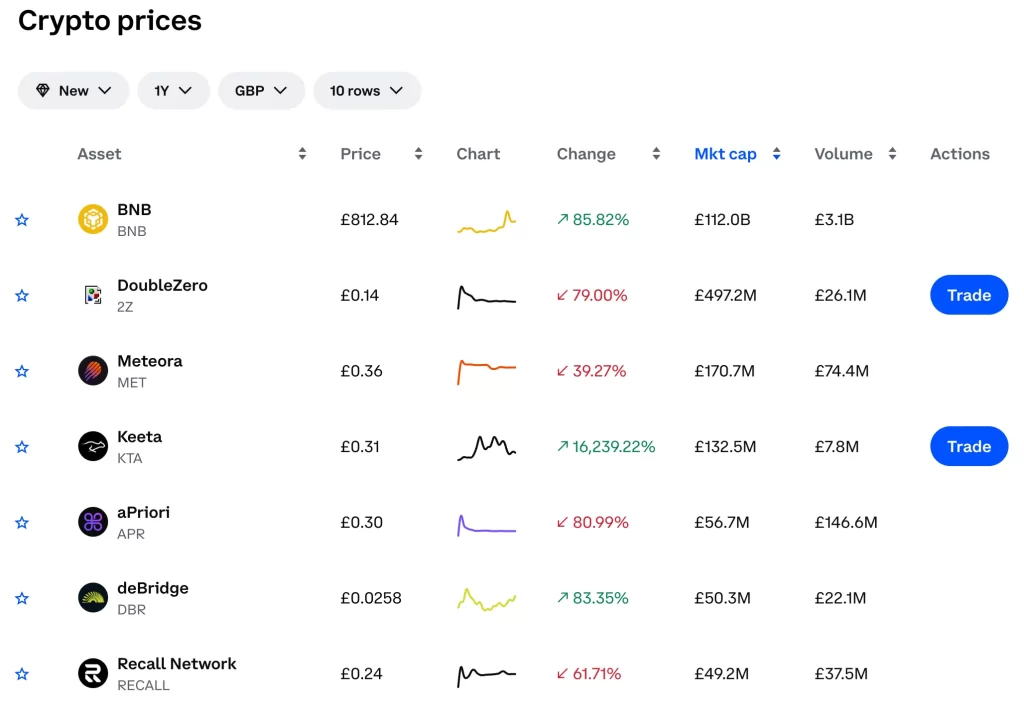
Bear in mind that some exchanges require registration to provide more detailed data.
Social media
Social media is the fastest way to react to market changes, so it’s crucial to subscribe to resources that provide day-to-day information.
One of the fastest-moving platforms is X, the most popular crypto platform, with lots of channels and bloggers providing regular updates.
Some of the biggest on-chain analytics (whales, flows and alerts) and traders are:
- @lookonchain (Lookonchain) — fast whale/SmartMoney tracking; handy for timing.
- @AltcoinDailyio (Altcoin Daily) — broad news + trade narratives; very large audience.
- @TheMoonCarl (Carl Runefelt) — momentum narratives, altcoin cycles; massive reach.

More experienced investors subscribe to crypto developers such as @TimBeiko (Tim Beiko), who is responsible for core dev coordination and AllCoreDevs notes; @vdWijden (Marius van der Wijden), who is a Geth maintainer and posts client architecture threads; and @drakefjustin (Justin Drake), who is an EF researcher and posts insights on scaling and the roadmap.
Set up alerts such as ‘new crypto’ or ‘crypto release’ to receive exhaustive information on all the assets you need.
Telegram is also the default platform for project communities, announcements, bots/mini-apps and P2P chats, and now has ~1 billion monthly active users (MAU) with heavy crypto usage.
YouTube is perfect for long-form explainers, AMAs and tutorials, and is a top source for crypto news and education.
You can also use Discord and Reddit to communicate with like-minded people and find relevant information on r/CryptoCurrency, r/Bitcoin, and other subreddits.
Data aggregators
Data aggregators gather all information on a specific topic in one place. You can then filter this information to find the things that interest you the most. The most popular and reputable websites in this sphere are Top ICO List, TradingView, CoinGecko and CoinMarketCap.
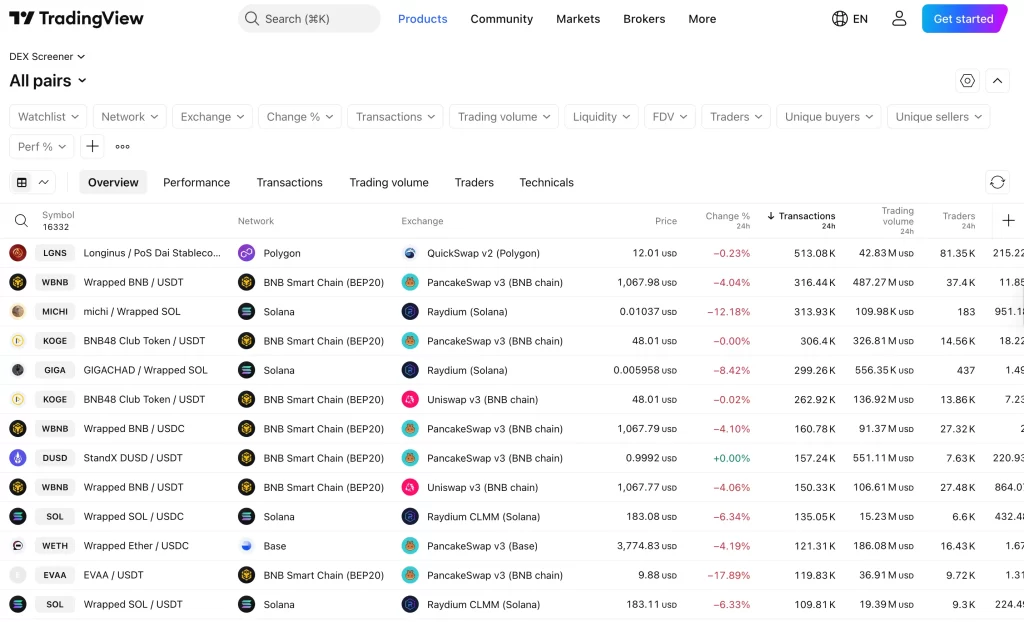
They display a list of new cryptocurrencies, showing their prices, market capitalisation and trading volume. This is the perfect way to gather all the relevant information needed to find out what other investors are doing and to decide whether or not an asset you’re interested in is profitable.
Special tools
There are also lots of special tools to help you understand the validity of a cryptocurrency.
For example, Kryptview lets you search for a token by name or contract address, while BSCCheck focuses on Binance Smart Chain tokens. Both show transaction history, contract details, holder distribution, price data and other on-chain signals, enabling you to gauge real activity. There are also plenty of other tools for token due diligence.
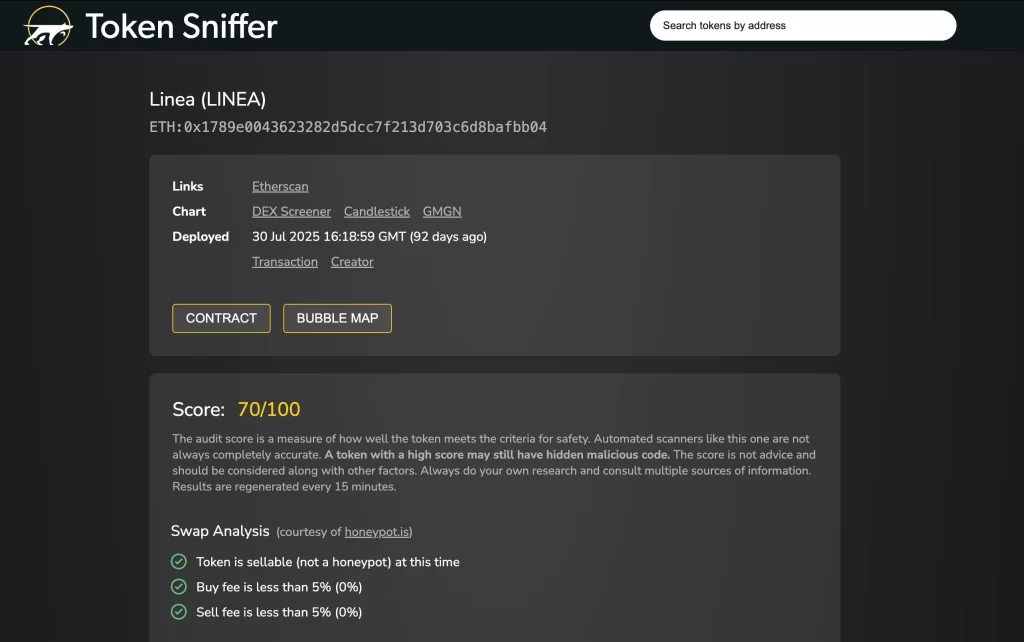
Token Sniffer accepts a name or address and generates an automated audit/risk report for the token. Let’s take the address of one of the most promising new coins, Linea — the native asset of the Linea network and an Ethereum-aligned Layer 2 solution built with ZK-rollup technology — as an example.
After entering 0x1789e0043623282D5DCc7F213d703C6D8BAfBB04 on the homepage, exhaustive information about the asset is provided.
DeFi platforms
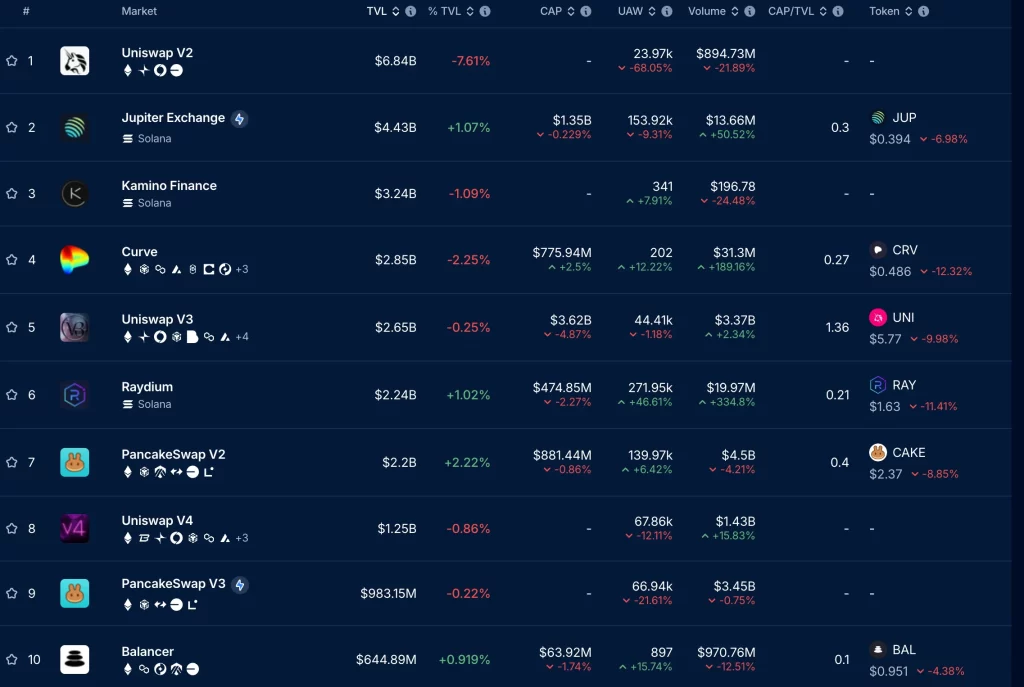
Decentralized finance (DeFi) platforms combine blockchain technology and programming to create ecosystems that help you build decentralized applications (dApps).
They support a variety of DeFi services, such as peer-to-peer lending, borrowing and liquidity provision.
Bear in mind that many DeFi platforms issue their own tokens, and if the platform is excellent, the investment could be very lucrative. Popular DeFi platforms include Maker, Uniswap, Curve and PancakeSwap, among many others. Go to DappRadar or another reliable aggregator to see the full list of the best platforms right now.
How to diversify your crypto portfolio
What is diversification?
Diversification is a core principle of any investment, especially in the world of cryptocurrency. A diversified portfolio spreads investments across multiple cryptocurrencies and blockchain-based assets.
The main goal of diversification is to strike the perfect balance between risk and reward, ensuring that your portfolio is less dependent on the volatility of the crypto market.
Tips to help you diversify your portfolio properly
Invest in assets with different risk profiles
To build a well-diversified crypto portfolio, it’s crucial to understand the different types of crypto assets and the role they can play in your portfolio.
Always distribute your investments across large-, medium- and small-cap crypto assets, allocating them properly. The higher the market cap, the lower the risk, and vice versa. Check crypto asset market caps on CoinGecko, CoinMarketCap, DappRadar, or other reliable aggregators.
Rebalance your portfolio from time to time
The crypto market is too volatile to keep your portfolio stable all the time. Review your wallet and rebalance it in response to changes in the market and your new goals.
For example, if the price of an asset in your portfolio has increased significantly, it’s time to sell and rebalance.
The Coinbase graph of the BNB price over the past year shows that it would be a good time to sell if you were lucky enough to buy it in time.
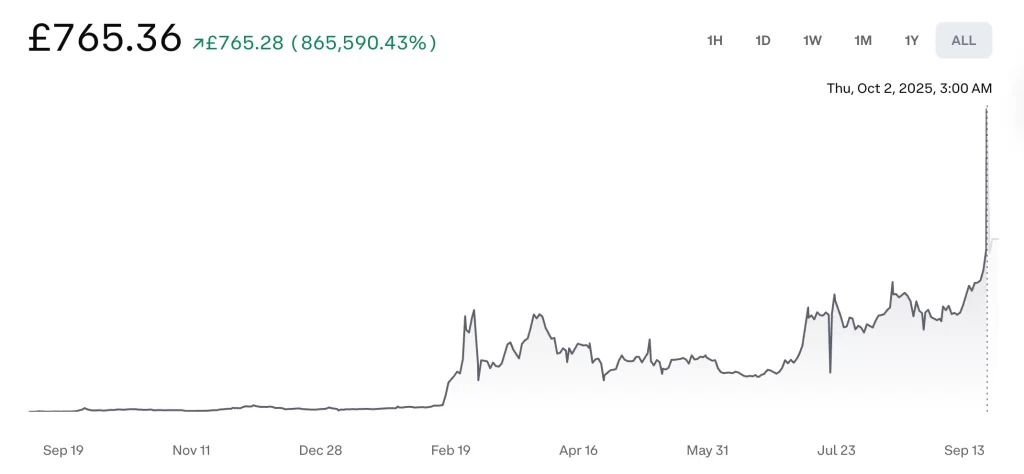
You can simply sell some and convert the proceeds into stablecoins or a promising new altcoin.
Diversify assets by use and sector
Different parts of the crypto market move for different reasons – some rally on hype, others on tech updates, regulation shifts, or macro trends. That’s why spreading your exposure across sectors matters. It lowers the risk of getting blindsided if one narrative falls apart.
Take DeFi, for example. If sentiment turns and those mid- or small-cap tokens start bleeding, having a solid core in more established, liquid assets – like Bitcoin – can help steady the portfolio. Those larger caps tend to move differently and, in rough patches, act like ballast. They won’t eliminate losses, but they can cushion the impact.
This kind of cross-sector mix is less exciting on the surface, but it protects capital and keeps you in the game when the tide turns. You’re not forced to sell the bottom just to survive. Think of it as pairing your high-upside bets with a layer of defense. Then, rebalance from time to time to keep things aligned with your targets – especially after big moves in either direction.
Resume
Forget chasing the next hyped-up coin or aping into whatever’s trending on Twitter/X. Building a solid crypto portfolio isn’t about FOMO – it’s about having a method. Start with the basics: what are your actual goals, and how much risk are you really comfortable taking on? That’ll shape everything else.
From there, anchor your portfolio with a core of high-liquidity, established assets – think of these as your “sleep well at night” holdings. Around that, you can start layering in smaller, more speculative plays. But be picky. For every coin you consider, pull data from different angles:
- Look at where it’s listed and how it trades (volume, spread, volatility).
- Check community vibes -are people just hyping, or is there genuine engagement on X, Telegram, Discord, etc.?
- Use sites like CoinGecko, CMC, or TradingView to dig into the numbers.
- And don’t skip the contract-level stuff: platforms like Token Sniffer or BSCCheck can help flag sketchy tokens before they blow up in your face.
- When it comes to DeFi, treat platforms as potential, not promises. Dive into the tokenomics, the emissions schedules, and how governance works – if at all. A flashy UI doesn’t mean it’s solid under the hood.
Now, let’s talk about risk. Spreading your bets is key. Don’t go all-in on a single sector (like gaming, or L1s, or AI coins). Mix up your exposure by market cap, use case, and geography where possible. Decide how much each position should weigh, then rebalance either on a set schedule or when something drifts too far from target. Keep some stablecoins or cash on hand—you’ll want dry powder when markets dip or opportunities pop up.
Security? Non-negotiable. Use hardware wallets. Rotate passwords. Don’t click weird links, even if they come from people you know. Most losses in crypto aren’t from bad trades – they’re from avoidable mistakes.
In the end, it’s not about making the perfect play – it’s about having a repeatable process. Good research and smart risk management won’t protect you from every swing, but they will tilt the odds in your favor. Be patient. Keep notes. Size your positions modestly. With time, discipline beats luck.