


Staking, derived from the English word 'stake,' represents an innovative way to generate passive income involving cryptocurrencies that operate based on the Proof-of-Stake (PoS) consensus algorithm and its variations.
27.03.2026

Many cryptocurrency owners don’t want their coins to just sit idle in a wallet. This is where staking comes in. On blockchains using the Proof-of-Stake algorithm, you can lock up certain tokens and earn rewards for supporting the network. This is one of the easiest ways to generate passive income in cryptocurrency, especially if you do it through an exchange rather than setting everything up yourself. Ethereum’s transition to the Proof-of-Stake algorithm has also reduced energy consumption by approximately 99.95%, which helps explain why staking is often presented as a more eco-friendly alternative to mining.
At the same time, “simple” does not mean “risk-free.” Before staking through an exchange, it’s helpful to understand what’s actually happening behind the scenes, how rewards are paid out, and what you’re sacrificing in exchange for convenience.
How staking works in PoS blockchains

In a Proof-of-Stake network, validators are responsible for confirming transactions and adding new blocks. Instead of competing using computational power, as miners do, validators are selected based on the amount of cryptocurrency they have staked. In Ethereum, time is divided into 12-second slots, and in each slot, one validator is randomly selected to propose a block. To run your own validator on Ethereum, you’ll need 32 ETH and three separate software components: an execution client, a consensus client, and a validator client.
This is precisely why staking on exchanges has become so popular. Most people don’t want to deal with managing hardware, ensuring uptime, updating software, or handling validator keys. Instead, they stake through a platform that pools customers’ funds and handles the technical side. Ethereum’s own documentation on staking notes that pools exist precisely to allow people with smaller amounts to participate without having the full 32 ETH required for individual staking.
Why people choose staking on exchanges
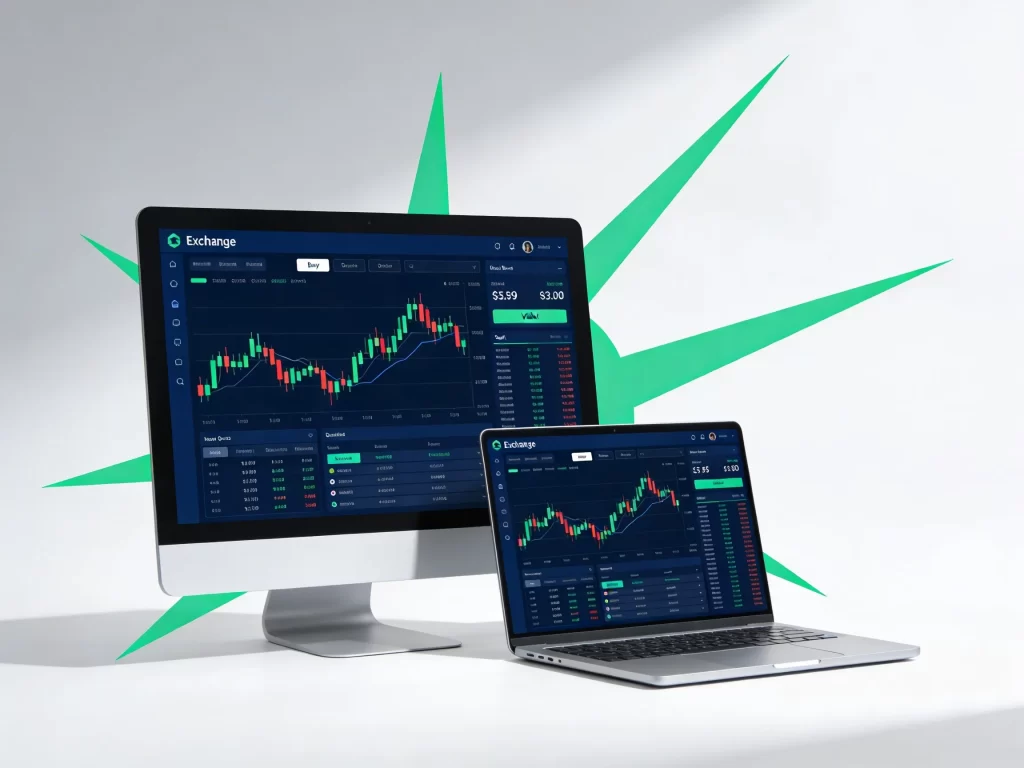
The main reason is convenience. Exchanges remove much of the technical complexity, so the user experience usually boils down to buying a supported asset, clicking the “staking” button, and waiting for rewards to accrue. This is important because the barrier to direct staking can be high. Ethereum individual staking still requires 32 ETH, while exchange or pooling options allow users to join with a much smaller amount. Coinbase, for example, advertises staking available as early as $1, which shows how much lower the entry threshold can be on a centralized platform.
Another reason is access to established PoS ecosystems without additional effort. Solana is a good example. According to Staking Rewards, about 67.68% of Solana’s staking-eligible circulating supply is currently involved in staking. This suggests that staking is not some niche feature of the network, but a key part of its operation. For the average user, using an exchange is often the easiest way to take advantage of this.
What you actually give to the exchange
When you participate in staking on an exchange, you don’t typically validate the blocks yourself. You give your tokens to a platform that stakes them on your behalf through its own infrastructure or partners. The exchange collects the protocol’s rewards, retains a portion as a commission, and passes the balance to you. This model is simple, but it also means you take on counterparty risk: your assets are tied not only to the blockchain, but also to the security, solvency, and rules of the exchange.
This trade-off is at the heart of exchange staking. You get convenience, lower entry requirements, and less technical hassle. In return, you give up some control over custody, redemption dates and commission transparency.
Risks that people underestimate

The first risk is storage. If you participate in staking through an exchange, the platform controls the operational side of the process, and in many cases it also stores your funds while they are involved in the staking. If something goes wrong at the exchange level, your exposure is no longer limited solely to the chain.
The second risk is commissions. Many users focus on the claimed annualized yield (APY) and forget to check how much the exchange retains. Kraken claims to charge 30% commission on rewards earned through Flexible Staking and Auto Earn. Coinbase states that there is no commission for asset staking, but does charge a fee on rewards you receive from the network, with the standard fee being 35% for several major assets including ETH, SOL, ATOM, ADA, and DOT. These deductions can have a significant impact on your actual returns.
The third factor is liquidity. Some products advertise rewards, but the real question is how quickly you can get your funds back. Binance reports that early redemption of locked products can take up to 48-72 hours, and previously paid rewards can be deducted from the returned principal. Coinbase reports that users can choose standard withdrawals with no fee and an online wait or instant withdrawals with a 1% fee. In a rapidly changing market, these details matter much more than they seem at first glance.
The fourth factor is eligibility. Staking is not available everywhere, and the rules can vary depending on your jurisdiction. Coinbase explicitly states that clients must be in a jurisdiction that allows staking and that eligibility is checked regularly.
What you need to check before you start staking
If you’re choosing an exchange for staking, start with the basics: security history, storage model, commission structure, lock-in rules and how rewards are calculated. Then check the terms and conditions for withdrawing bets. A platform that looks generous on paper may be far less attractive when you consider the commission, redemption delays or early withdrawal penalties. Kraken, Binance, and Coinbase publish all of these details, and this is the kind of transparency you should look for before investing.
It’s also a good idea to keep realistic expectations. Staking can increase returns, but it doesn’t protect you from price fluctuations. If the token itself drops sharply in value, a few percentage points of staking fees may not make up for the loss. Therefore, the quality of the asset still matters as much as the reward rate. This is why staking works best as part of a broader strategy, not as a “shortcut to easy income.”
Conclusion
So, what is exchange staking? Simply put, it’s a way to earn rewards from the Proof-of-Stake network without running your own validator. The exchange manages the infrastructure, pools customer funds, and shares the rewards after deducting its commission. For beginners or those who value convenience, this could be a perfectly practical option. But it only makes sense if you understand the trade-off: less technical work for you, more reliance on the platform.
If you want to do it right, go beyond the marketing page. Check the actual commission, withdrawal rules, lock-in period and whether staking is available in your area. This is what makes the difference between a useful passive income tool and an unpleasant surprise.