In 2025, Ethereum remains one of the world’s leading cryptocurrencies. According to Dune, the total on-chain holdings of Eth ETFs is $10.16 bln and growing. Between 3 February and 7 February 2025, spot bitcoin and Ethereum ETFs in the US market raised $623.6 million, according to SoSoValue.
08.08.2025

30 July 2025 marked the 10th anniversary of the launch of the Ethereum blockchain. To mark this significant milestone, the project’s team made several updates.
First, the Ethereum Torch campaign was launched, in which the torch was passed from one outstanding community member to another. By the end of the campaign, all participants could mint an Ethereum Torch NFT for free.
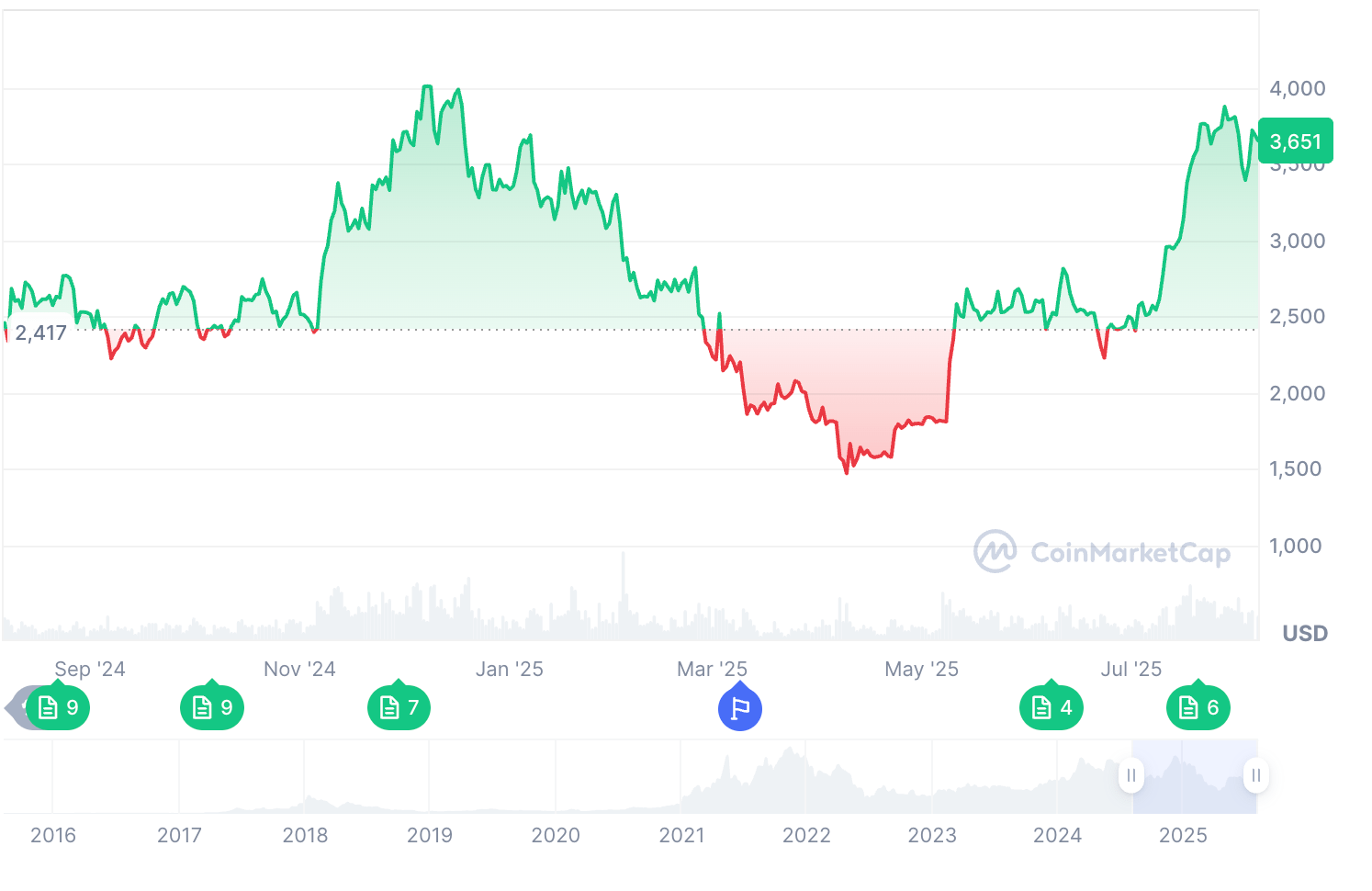
It is fair to say that the Ethereum team has something to be proud of. After dropping below $1,400 in April, Ethereum made a comeback and proved that it still has potential.
Ethereum big data in 2025
According to Glassnode, open interest in Ethereum has never been higher in the last two years. For the first time since April 2023, Ethereum’s share of the derivatives market has reached almost 40%, while Bitcoin’s dominance is in decline. Let’s take a look at some of the most important metrics.
The number of transactions is constantly rising, reaching 1,350,000 and beyond.
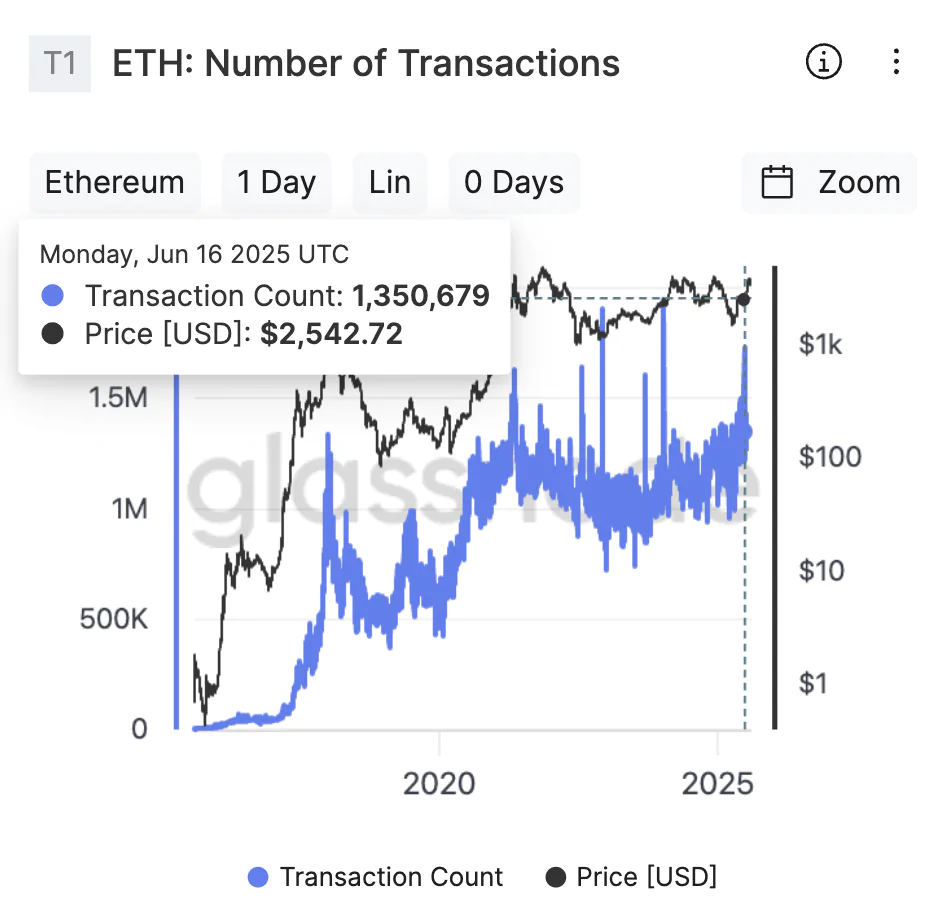
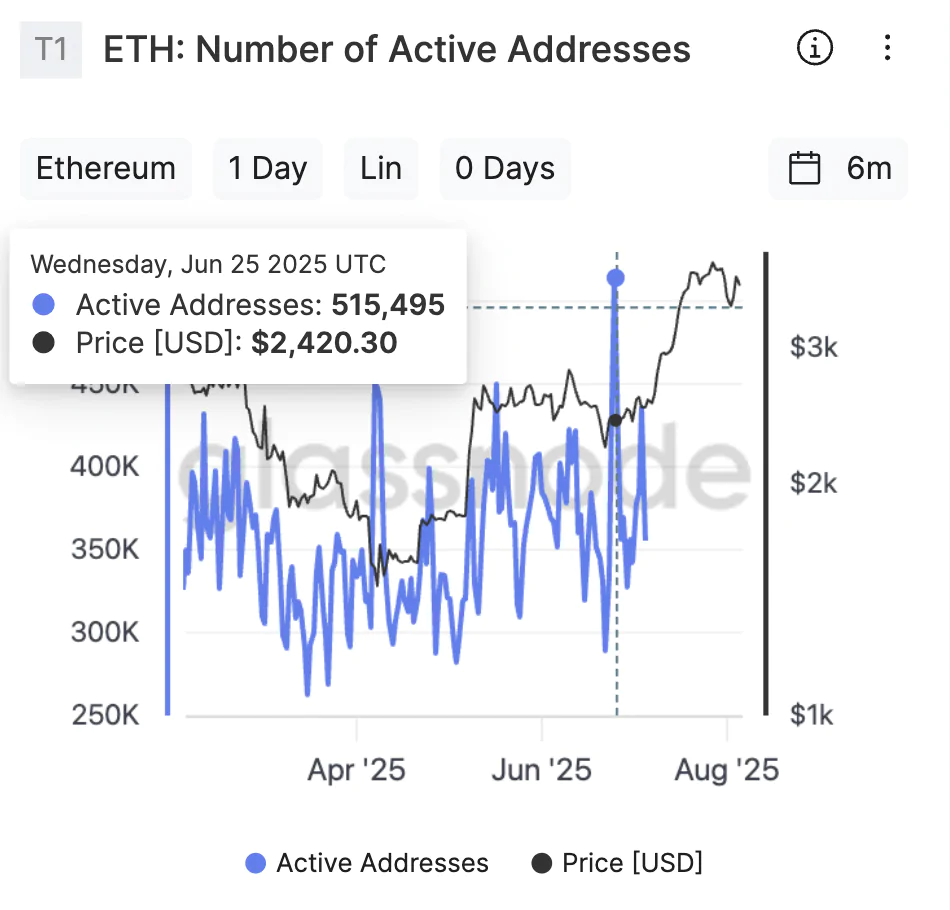
The number of active addresses peaked in June 2025 at 515,495, before decreasing to around 380,000.
Notably, the volume of open positions on the CME exchange, the world’s leading derivatives marketplace, reached a record $7.85 billion. This indicates a recovery of institutional interest in the asset.
According to a report by CoinGecko, the ten largest holders of Ethereum among public companies control 1.002 million ETH. The top two holders on the list account for 65.9% of the total Ethereum volume combined.
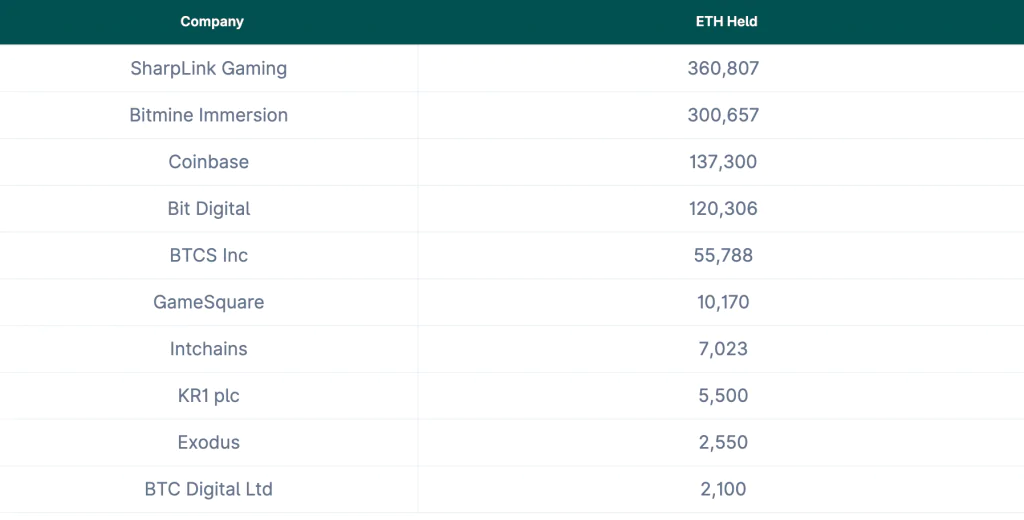
Analysts at Bernstein (a well-known international research and brokerage firm) have noted that companies are increasingly choosing Ethereum for their treasuries due to the potential income from staking. They estimate that staking $1 billion in Ethereum could generate up to $50 million in profits.
It’s therefore no surprise that so many companies have acquired large amounts of Ethereum recently.
For example, a biotech company rebranded as ETHZilla, focusing on a $425 million Ethereum treasury; BTCS plans to raise up to $2 billion to replenish its crypto asset reserve; and The Ether Machine acquired nearly $57 million worth of Ethereum to celebrate the network’s 10^(th) anniversary.
Overall, over the past two months, companies using Ethereum as a strategic asset have purchased around 1% of all coins in circulation – over 1.2 million ETH.
The total value of these reserves is already approaching $4.5 billion. Standard Chartered experts predict that such companies could potentially accumulate up to 10% of the total Ethereum supply.
Experts report that Reddit users are warning others about scam crypto wallets that trick people into losing their Ethereum. Meanwhile, Ethereum is gaining attention on Telegram as the leading platform for smart contracts, with growing momentum in staking, DeFi, NFTs, Layer-2 scaling solutions and institutional adoption.
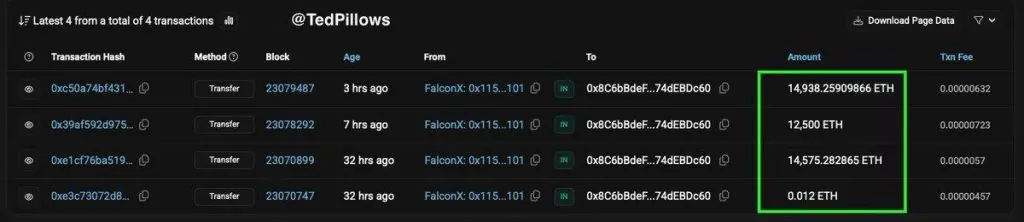
Analyst Ali Martinez has noted that some of the largest ‘whales’ on the network purchased over 220,000 ETH, worth around $840 million, in the last 48 hours alone.
According to Lookonchain, nine new wallets have accumulated a total of 640,646 ETH (worth $2.43 billion) since 9 July.
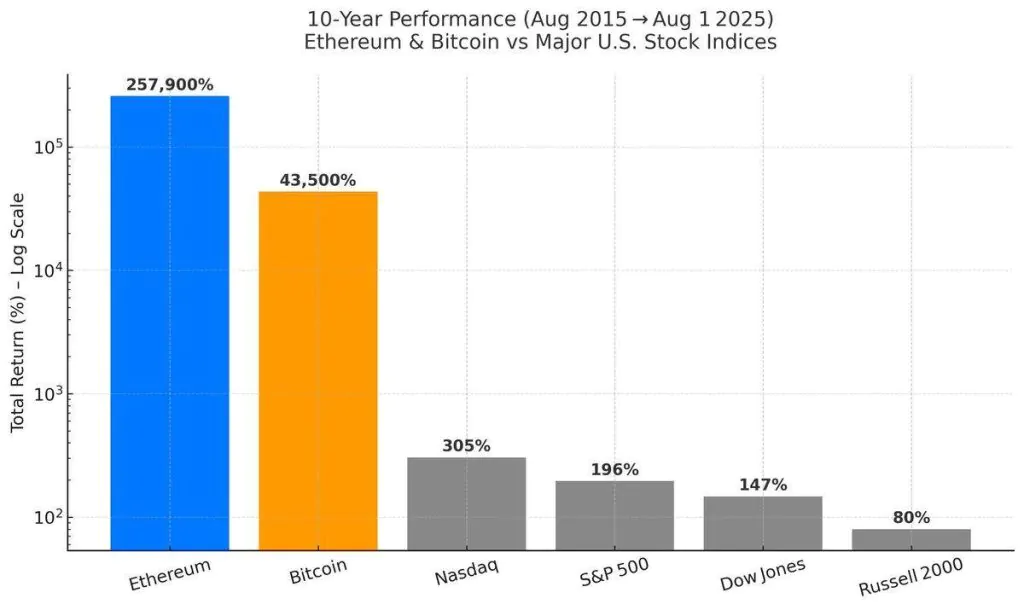
All in all, Ethereum outperformed other currencies at the end of the 10-year cycle.
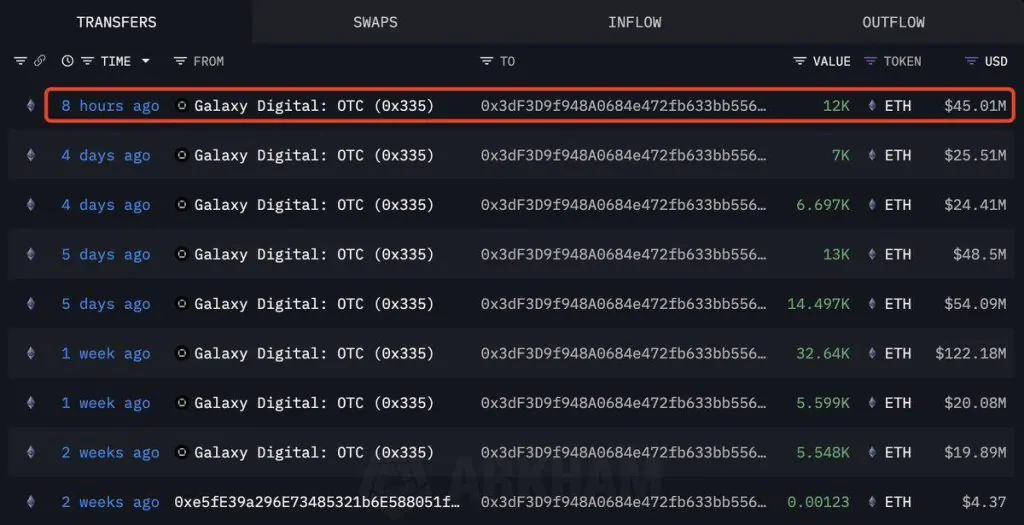
Such whale alerts really seem to indicate positioning for the next phase.
Ethereum milestones and potential
The development of the Ethereum blockchain has been marked by several significant milestones that have influenced the entire industry.
Ethereum 2.0 (ETH 2.0)
Ethereum 2.0, also known as ‘The Merge’, signalled Ethereum’s transition from a Proof of Work (PoW) to a Proof of Stake (PoS) consensus model. In autumn 2017, the average block took 30 seconds to be mined, which proved disastrous. Moreover, high fees complicated matters considerably. In 2021, Ethereum’s on-chain fees reached a record high of $47.3 million per day.
The main feature of Ethereum 2.0 is its PoS functionality. The new version of the blockchain will therefore verify transactions via staking.
The powerful PoS benefit is achieved by eliminating the ETH Proof-of-Work emission in each block. Consequently, all ETH coins transferred to miners in support of the chain will be burned. Following the PoS transfer, the annual emission volume decreased from 5.5 million ETH to 0.6 million ETH, or approximately 1,000 to 2,000 ETH per day.
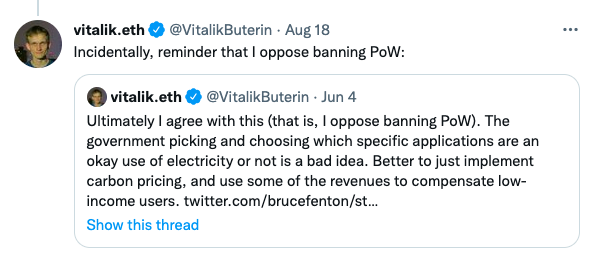
Furthermore, maintaining all the mining capacities for PoW processes requires a lot of effort, money and energy. Huge PC power usage is highly polluting and not at all eco-friendly. The energy consumption of PoS transactions is 99% lower than that of PoW transactions. As an added bonus, this could attract institutional investors and bring more funds to the network.
This milestone was therefore crucial for the blockchain.
Layer-2 solutions
To improve Ethereum’s scalability, solutions such as Arbitrum and Optimism were created. These protocols enable faster speeds and much lower fees. As more users and applications adopt these technologies, the network becomes less congested and more efficient. This could also have a positive influence on Ethereum’s price.
Pectra upgrade
This upgrade introduces several significant technical improvements:
Account abstraction (EIP-3074): This upgrade enables regular wallets to function more like smart contracts. It enables new features such as batch transactions, fee sponsorship and custom security settings. Consequently, user interaction with dApps becomes more convenient.
Increased validator limit: The maximum stake per validator has increased from 32 ETH to 2,048 ETH. This benefits larger validators in particular. At the same time, smaller validators can reinvest their rewards more effectively.
PeerDAS (Peer Data Availability Sampling): This upgrade minimises the cost of data verification for Layer-2 rollups, making scaling solutions such as Arbitrum and Optimism cheaper and more sustainable.
Historical reference: how the price of Ethereum changed
Between 2017 and 2018, the price of Ethereum briefly reached several hundred dollars before peaking at almost $4,800 in November 2021. In the first half of 2025, the price of Ethereum rebounded sharply, rising from lows in the $1,700–$1,800 range in April to reach the mid-$3,600s by early August. Over the past year, Ethereum has gained over 50%, and more than 40% in July alone, partly driven by positive ETF flows and protocol upgrades.
Ethereum has only ended July with positive dynamics three times: in 2020, 2021 and 2022. The worst result was recorded in 2017, when the asset’s price fell by 27.29%. On the other hand, the nearly 50% growth in July 2025 was the most significant in the cryptocurrency’s history.
This dramatic rally demonstrates Ethereum’s potential for sharp climbs and steep corrections — it’s not a “store-of-value” stablecoin; it’s an innovative asset.
Ethereum ETFs and their importance
On 5 August, net capital inflows in the Ethereum-based crypto sector amounted to $73.2 million. BlackRock’s product under the ticker ETHA led the way with financial injections of $88.8 million. The fund’s AUM stands at $9.46 billion.
Inflows were also recorded for spot ETFs from VanEck ($5.2 million) and 21Shares ($3.6 million).
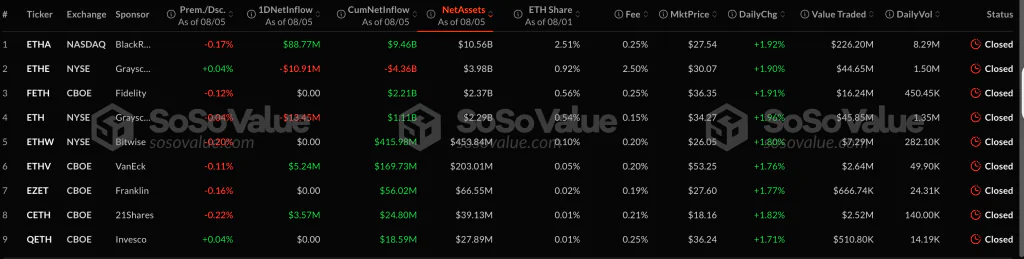
Why did it happen? While Bitcoin struggled near the $115k–$118k resistance level, Ethereum showed relative strength by trading just below the key $4,000 level. Many investors considered this to be a final opportunity for accumulation. Furthermore, the simultaneous outflows of BTC and inflows of ETH suggest a sector rotation.
On 5 August, analysts were increasingly speculating that ETH ETFs may soon support staking rewards. If ETH can generate yield for investors, it will become even more attractive to them.
It is also important to distinguish between Ethereum futures ETFs and Ethereum spot ETFs. A spot ETF buys and holds actual Ethereum on behalf of investors. In contrast, a futures ETF holds contracts that speculate on the future price of ETH (typically monthly CME futures).
A spot ETF buys ETH directly on the market and stores it in custodial wallets. Therefore, if you purchase shares, you essentially gain exposure to real ETH without holding it yourself.
Futures ETFs buy CME-traded futures contracts that expire monthly. However, it may lag behind the current ETH price, making it less profitable than spot ETFs. This is why companies like BlackRock opt for the latter.
In July, for example, inflows into Ethereum ETFs totalled almost $5.5 billion — a new all-time high. It is safe to say that this is definitely an upward trend right now, and spot ETFs will keep the price of Ethereum high for a long time.
Bullish scenarios: what could drive Ethereum higher?
Ethereum dominance has currently reached a crucial level. ETF inflows have turned positive again, with companies and individual ‘whales’ continuing to buy.
If large investors are able to increase Ethereum’s market share above 13.5%, a significant amount of capital will shift from BTC to ETH.
There are lots of signs that this could happen soon.
Overall, Ethereum’s price is driven by several major factors, including macroeconomic factors, regulatory developments (e.g. ETF approvals) and technical upgrades (e.g. Layer 2 scaling and the Cancun upgrade).
Looking back, there have been a couple of bull cycles for ETH:
2017: ICO boom
2021: DeFi and NFT explosion
2024–2025: RWA tokenisation
Right now, there are many factors indicating that the next cycle is just around the corner. As the US accelerates crypto adoption, including spot ETF approvals, stablecoin legislation and the establishment of crypto reserves, Ethereum (ETH) is emerging as a top institutional target. According to Strategic ETH Reserve, 58 entities now hold a combined total of 1.87 million ETH, worth around $7 billion.
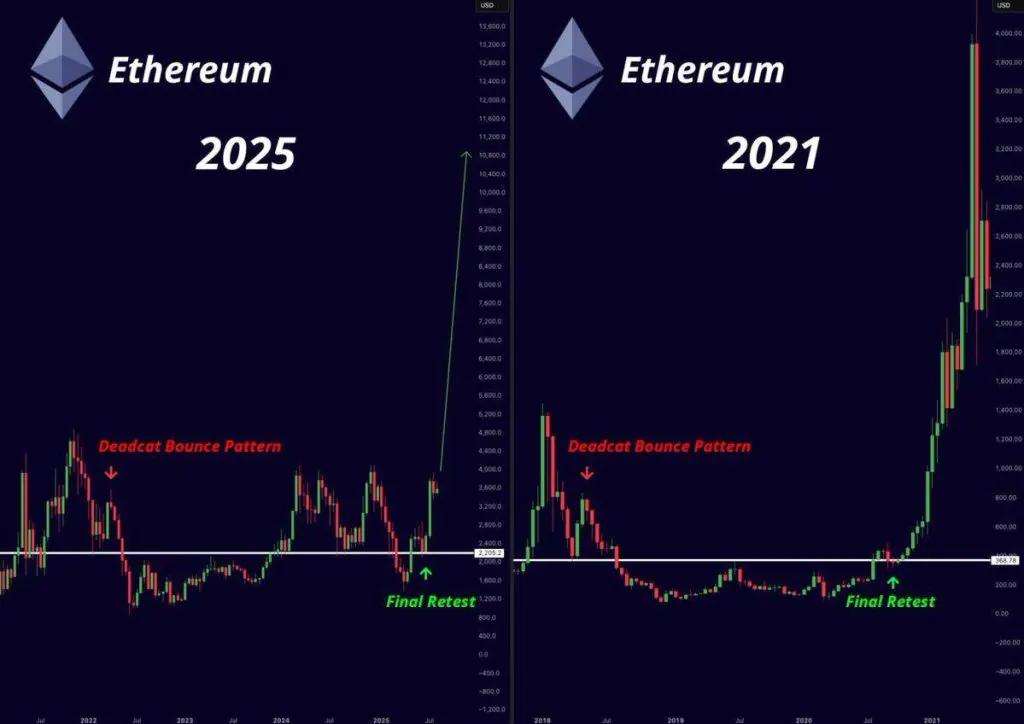
Moreover, Ethereum is setting up just like it did in 2021 before the bullish cycle. Many experts believe that this scenario will play out 100%.
The US Securities and Exchange Commission’s (SEC) approval of the first spot Ethereum ETFs in July 2024 has made it easier for institutional investors to access Ether tokens, which could strengthen market liquidity. From October 2025, options trading on these ETFs will also become available, allowing for new strategies and potentially further driving market dynamics. Layer-2 solutions such as Optimism and Arbitrum reduce transaction costs and increase scalability, which could encourage further ETH usage.
Following the Pectra upgrade on 7 May 2025, smart contract transactions were simplified by introducing smart accounts. It also became possible to pay transaction fees in tokens other than Ether (ETH), thereby strengthening Ethereum’s competitive position against Solana and Sui.
Furthermore, Ethereum is gaining importance in the traditional financial sector. Companies such as State Street are collaborating with Taurus to convert real assets into tokens on the Ethereum blockchain. This development could stabilise Ethereum’s long-term value performance.
Technical Breakout Above $4,000
If ETH were to close the week (or, even better, the month) above that level, it would signal a significant shift in the trend. Chart analysts note that breaking out of the long-term ascending triangle pattern could indicate targets of around $6,000 to $8,000, based on the height of the triangle.
Continued institutional accumulation
The bullish trend of institutional buying doesn’t appear to be slowing. A particularly bullish scenario would be if a major asset manager were to announce a significant Ethereum investment, or if an Ethereum ETF were to become as popular as some commodity ETFs.
DeFi and network growth resurgence
Ethereum’s price often correlates with usage booms on the network. If a DeFi renaissance occurs or a new wave of blockchain applications emerges later in 2025, this could increase demand for ETH, since it is the primary gas and collateral asset for the Ethereum ecosystem. Additionally, the emerging Layer-2 token sector is growing in importance – while L2s can have their own tokens, increased L2 usage still indirectly benefits ETH via fees and settlement. If Layer-2 adoption continues to increase dramatically (for example, if Base or zkSync onboard millions of new users through a popular app or partnership), the overall economy of Ethereum will grow, thereby enhancing the value proposition of ETH.
Successful implementation of future upgrades (sharding)
The main item on the development roadmap is sharding, which involves breaking the Ethereum database into smaller pieces to vastly increase throughput. Full sharding (Danksharding) may not be achieved until after 2025, but even incremental steps, such as Data Availability Sampling, could be implemented sooner.
Conclusion
Rising inflows into Ethereum ETFs, the Pectra upgrade, and declining supply growth are strengthening the confidence of institutional investors. Despite the price remaining below the all-time high, analysts expect Ether (ETH) to rise above 5,000 US dollars by the end of 2025 if the current trend continues.